Hiking is a wonderful outdoor activity that allows you to connect with nature, challenge yourself physically, and explore new landscapes. At the time of opting for the right gear for hiking, one often overlooks the importance of going with the appropriate thickness of hiking socks. Blister hiking socks play a crucial role in ensuring comfort, moisture management, and protection for your feet during long and strenuous treks.
This is a detailed guide in which we will delve into the factors you need to mull over when selecting the right thickness of hiking socks to make sure optimal performance on the trail.
The Importance of Hiking Sock Thickness
Prior to we dive into the intricacies of choosing the right thickness, let us understand the reasons why hiking sock thickness matters. Hiking involves a wide range of terrains, weather conditions, and durations. The right sock thickness can significantly impact your overall hiking experience.
Cushioning and Impact Absorption — Hiking involves constant impact on your feet, especially when it comes to navigating rough terrains or descending steep slopes. The thickness of the sock plays a role in cushioning your feet against these impacts, reducing the risk of blisters and discomfort.
Moisture Management — Hiking can make your feet sweaty due to prolonged physical activity and varying weather conditions. Socks with the appropriate thickness can effectively wick away moisture, keeping your feet dry and preventing the formation of blisters.
Temperature Regulation — Depending on the climate, your feet can experience varying levels of temperature. Socks with the right thickness can help regulate the temperature of your feet, keeping them warm in cold conditions and allowing them to breathe in warmer weather.
Protection — Thicker socks provide an additional layer of protection against debris, rocks, and potential irritants found on the trail, reducing the risk of cuts and abrasions.
Factors to Consider When Choosing Hiking Sock Thickness
Selecting the optimal thickness of wool socks for hiking involves mulling over quite a lot of important factors. Let us delve into each of these factors to help you make an informed decision:
Trail Conditions
Terrain Type — Mull over the type of terrain you will be hiking on. Rocky and uneven trails might require thicker socks for added cushioning and protection.
Altitude and Climate — Higher altitudes and colder climates demand thicker socks to provide adequate insulation against the cold.
Hiking Duration
Day Hikes — For shorter day hikes, a mid-weight sock with moderate cushioning is often sufficient.
Multi-Day Treks — Longer hikes may require thicker socks to maintain foot comfort over extended periods.
Foot Shape and Sensitivity
Arch Support — If you have high arches, you might benefit from thicker socks with added arch support to prevent strain.
Foot Sensitivity — Individuals with more sensitive feet may prefer thicker socks to minimize discomfort and friction.
Boot Fit
Boot Volume — The volume of your hiking boots influences the sock thickness. Tight-fitting boots might require thinner socks, at the same time as roomier boots can accommodate thicker options.
Boot Break-In — If your boots are new and not fully broken in, slightly thicker socks can provide extra padding during the break-in period.
Personal Preference
Comfort — Ultimately, your comfort on the trail is paramount. Experiment with different thicknesses to find what suits you best.
Temperature Regulation — Mull over your personal tendency to feel cold or hot. Thicker socks provide more insulation, but you do not want your feet to overheat.
Material and Moisture Management
Material Blend — Look for socks made from moisture-wicking and breathable materials like merino wool or synthetic blends. These materials help manage sweat and moisture regardless of thickness.
Layering
Double Layering — When it comes to colder conditions, there are a lot of hikers who go with a thinner moisture-wicking liner sock beneath a thicker outer sock. This approach provides both moisture management and insulation.
Understanding Sock Thickness Levels
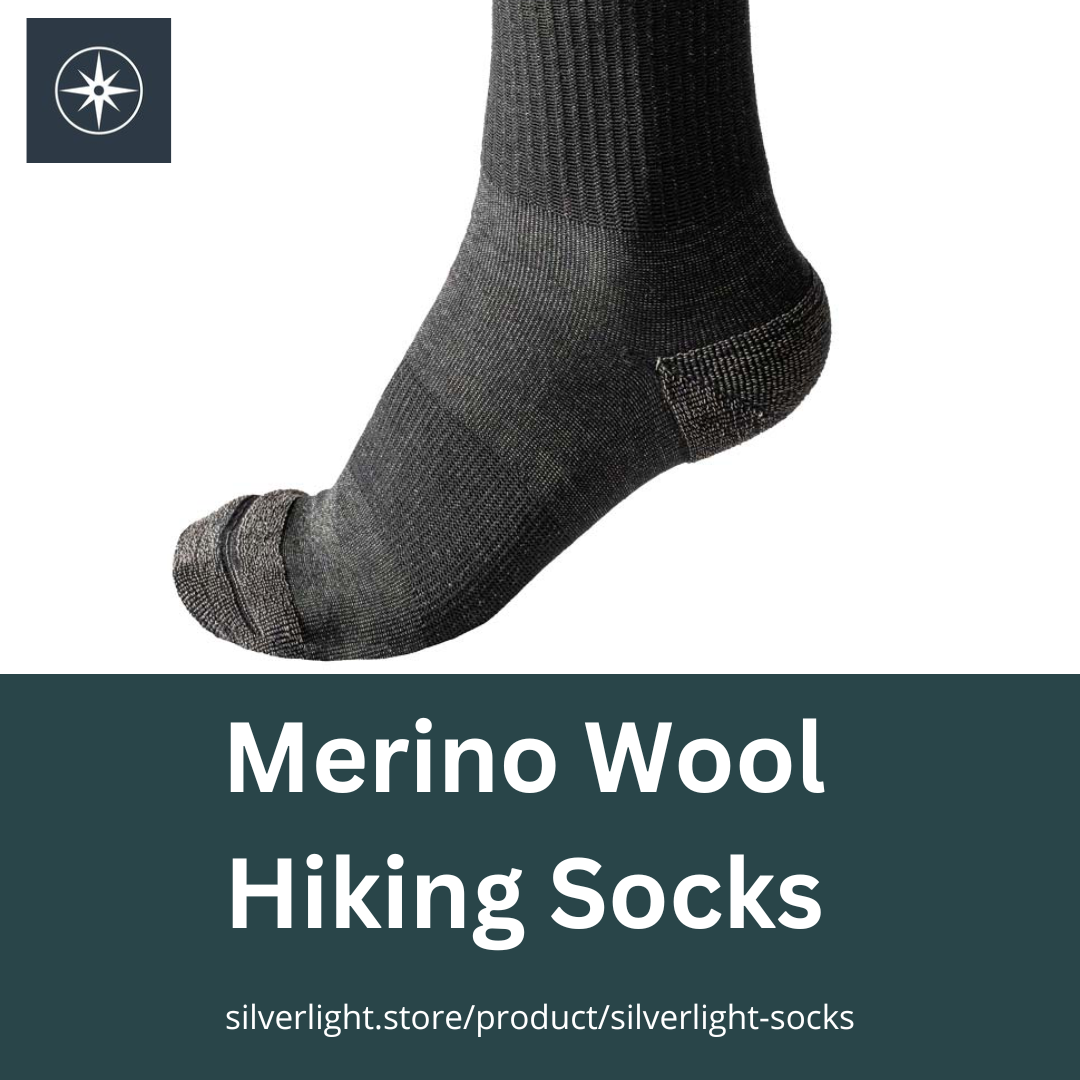
When it comes to Silverlight hiking socks, they are available in a wide variety of thickness levels, often categorized as lightweight, mid-weight, and heavyweight. Let us now check out each of these sorts:
Lightweight Socks
Thickness — Lightweight socks are thin and provide minimal cushioning. They are suitable for well-maintained trails, hot weather, and shorter hikes.
Benefits — Lightweight socks offer excellent breathability, making them ideal for keeping your feet cool and dry in warm conditions.
Considerations — They provide less impact protection and insulation, so they might not be suitable for rugged terrains or colder climates.
Mid-Weight Socks
Thickness — Mid-weight socks strike a balance between cushioning and breathability. They offer moderate cushioning and are suitable for a wide range of hiking conditions.
Benefits — These socks provide good moisture management, impact absorption, and protection against minor debris.
Considerations — While versatile, mid-weight socks might not be sufficient for extreme cold or very rocky terrains.
Heavyweight Socks
Thickness — Heavyweight socks are the thickest option, providing maximum cushioning and insulation.
Benefits — These socks are ideal for cold weather, rough trails, and longer hikes. They offer impeccable shield against abrasions and impacts while hiking or trekking.
Considerations — Heavyweight socks can sometimes lead to overheating in warmer conditions and might be too bulky for snug-fitting boots.
Trying On and Testing Socks
Prior to embarking on a long hike, it is essential to test your chosen socks in different conditions. Here is how you can make sure the sock thickness you have selected is right for you:
Test Runs — Wear your chosen socks on shorter hikes or walks to assess their comfort, cushioning, and moisture management.
Boot Compatibility — Try your socks with the hiking boots you will be using. Make sure there is an adequate amount of space for your toes and that the sock thickness does not make the boots too tight.
Temperature Variations — If possible, test your socks in both warm and cold conditions to assess their performance in different environments.
Longer Treks — If you are planning a multi-day hike, mull over testing the socks on a similar-duration trek to gauge their performance over time.
In Conclusion
When it comes to choosing the best hiking socks for men, going with the right thickness is a crucial decision that can significantly impact your hiking experience. By mulling over factors such as trail conditions, hiking duration, foot shape, boot fit, and personal preferences, you can make an informed choice. Always keep in mind that that comfort and functionality are supposed to be your top priorities.
No matter if you opt for lightweight, mid-weight, or heavyweight socks, thorough testing and trial runs will help you determine the best sock thickness for your unique hiking adventures. So, lace up your boots, slip on those socks, and hit the trail with confidence and comfort!


Write a comment ...